
Where The Wolves Feed

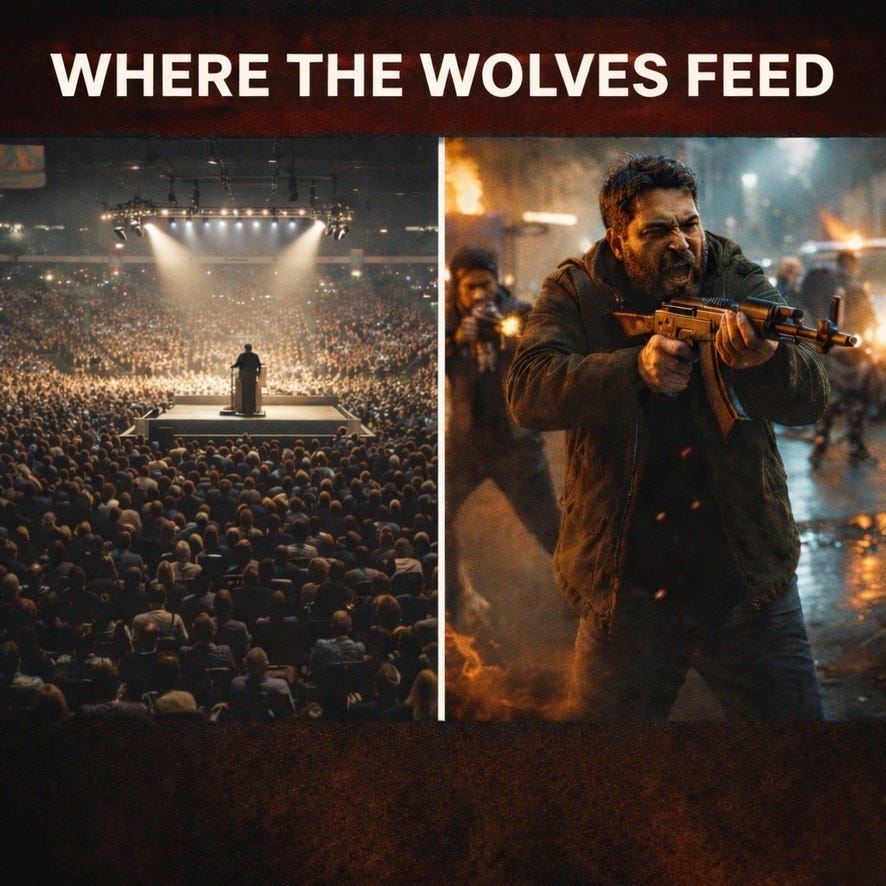
Copyright © 2026 Ryan Geho
All rights reserved.
This is a work of fiction. All characters, events, and locations are products of the imagination. Any resemblance to actual persons, living or dead, or actual events is purely coincidental.
WEDNESDAY AFTERNOON - SAVANNAH PD SHOOTING RANGE
The sun hammered down on the Savannah Police Department Training Facility. Heat rose in waves from the gravel lot. Spent brass casings littered the ground.
Captain James Miller stood at the twenty-five-yard line. His Smith & Wesson M&P 2.0 with Aimpoint ACRO red dot was nestled in his duty holster.
BEEP.
Six rounds from the holster in 3.1 seconds. All A-zone hits.
He conducted a tactical reload and ran it again.
He sensed someone behind him. He didn’t turn.
“Do you live here now, Jimmy?” Chief Holland’s voice.
Jimmy fired his last round. Made the weapon safe and holstered it. Still didn’t turn.
“What do you need, Chief?”
Holland walked up beside him. Stood silent for a moment.
“SWAT Commander position. Matthews got it.”
Jimmy’s hands stopped. Just for a second. Then continued loading.
“Copy.”
“That’s it?”
“What do you want me to say?” He turned to face Holland. “That I’m the better operator? That Matthews has a fraction of the tactical experience?”
“Jimmy—”
“Matthews got it because he’s likeable. Because he coaches his kid’s soccer team.”
Holland’s jaw tightened. “You’re out of line.”
“Am I?”
“Your old man was a hell of a Marine. Bronze Star. Saved his squad. Died doing it.” Holland paused. “You think that’s what this job is? Dying for the cause?”
“I think it’s about being the best. And I am.”
“At what cost, Jimmy? You’re forty-two years old. You live in a condo with no furniture. You eat takeout at your desk. Your last girlfriend left because—what did she say? ‘Dating you is like dating a ghost?”
“She didn’t understand the job.”
“Or maybe you don’t understand life.”
Silence. Hard. Brittle.
Holland softened slightly. “You’re the best shooter in the department. Best tactical mind I’ve got. But leadership isn’t just about being the hardest worker or the best shooter. It’s about making other people better.”
Jimmy looked away.
“Leadership is about the team trusting their commander.” And right now, they respect your skills, but they don’t trust you to care about them as people.
“I’d take a bullet for any of them.”
“I know you would. But would you notice if one of them was struggling at home? Would you check in if someone’s kid was sick?”
Jimmy had no answer.
Holland sighed. “Take the weekend. Monday morning, you and Matthews are meeting with me. I’m reassigning you.”
“To what?”
“Community liaison. Public relations. People skills.”
Jimmy’s face went white. “You’re benching me.”
“I’m developing you.”
Holland turned to leave.
“Chief.” Jimmy’s voice was flat.
Holland stopped.
“When something bad happens in this city—and it will—you’re gonna wish you had me running the response.”
Holland looked back. “Maybe. But when nothing bad happens—which is most days—I need someone who can lead a team without making them hate coming to work.”
He left.
WEDNESDAY NIGHT - JIMMY MILLER’S CONDO
Jimmy Miller sat in the dark.
He left the lights off. The condo didn’t need them. A couch, a television, open floor. No personal markers. No history on the walls. The kitchen was clean and untouched, arranged for use but not comfort. Everything had a place because nothing was meant to stay.
All except his collection of guns and gun parts lying around everywhere.
It felt less like a home than a staging area. Functional. Quiet. Built for someone who planned for departure.
He lived by a single rule: never get attached to anything you aren’t willing to walk away from in thirty seconds flat.
His phone rested on the coffee table.
Silent.
He picked it up and scrolled without purpose. His thumb paused at a name he tried not to linger on.
Mom.
Their relationship moved in cycles. Months of silence. A call that reopened old wounds. A short attempt at normal that always collapsed under the weight of what they never said. After his father died, nothing fit right again.
She blamed the Corps. Blamed the job. Blamed the version of Jimmy that came home quieter and harder to reach. Jimmy blamed himself. For leaving. For surviving. For never finding words that did not sound like excuses.
Earlier that afternoon, he had found the folded flag tucked in a drawer he almost never opened. He sat with it longer than he meant to. Studied the creases like they might tell him something new.
Ten years gone.
Still unfinished.
Jimmy looked at the phone again. Thought about putting it down. Thought about how easy it was to stay silent.
He pressed call.
The phone rang twice before she answered.
“James?” Her voice was thin. Careful.
“Yeah. It’s me.”
Silence stretched between them. Not hostile. Just heavy.
“I wondered if you would ever call,” she said.
“I should have called sooner.”
“You always say that.”
“I know.”
She told him she was going to be in town. Visiting a friend. Just for a day. Her tone softened when she said it, like she was offering a truce instead of a meeting.
“We could get dinner,” she said. “River Street. By where the Christmas market is. Friday around six. After work.”
River Street.
Crowded. Loud. Exposed.
But later had a way of becoming never.
“Okay,” he said. “I’ll be there.”
She exhaled like she had not expected him to agree.
“Good,” she said.
They did not say goodbye the way they used to.
She hung up first.
Jimmy set the phone down and leaned back against the couch.
River Street.
He did not like it. But saying no again felt worse.
FRIDAY — 1755 HOURS
OFFSHORE SAVANNAH
Captain Viktor Petrov stood on the bridge of the MSC Valencia, a massive container vessel inbound toward the Savannah Sea Buoy. Twenty-three years at sea. Hundreds of approaches just like this one. He knew the geometry of this coast as well as the lines on his hands.
The evening was calm. Seas barely rolling. Visibility unrestricted. No weather to blame. No excuses.
Radar showed clean water ahead.
His second mate stood at the starboard console, eyes flicking between displays.
“Two nautical miles to the channel entrance, Captain. Recommend coming left to zero-nine-zero to line up for approach.”
Petrov nodded. “Very well. Come left to zero-nine-zero.”
“Left to zero-nine-zero, aye.”
The helmsman applied rudder. The Valencia began a slow, deliberate turn.
Then the AIS alarm chimed.
Not once. Not a nuisance beep.
A full collision warning.
Petrov looked down at the Automatic Identification System display. His stomach tightened.
Another vessel—Maersk Shanghai—had appeared on a direct collision course. Range: half a nautical mile. CPA collapsing. Combined speed pushing thirty knots.
The AIS icon showed the Shanghai charging straight toward their port bow.
But Petrov’s radar told a different story.
The Shanghai was well clear to port, running a parallel course, exactly where she should be. No crossing angle. No danger.
“Contact Shanghai on VHF,” Petrov said. Calm voice. Tight jaw. “Verify course and speed.”
The radio officer keyed the mic.
“Shanghai, Shanghai, this is MSC Valencia on channel sixteen. Confirm your present heading and position.”
The reply came instantly.
“Valencia, this is Shanghai.” Captain Chen Wei answered. His voice was controlled, but strained. “Our AIS shows you crossing directly ahead of us. Collision risk severe. Recommend immediate turn to starboard.”
Petrov felt the pressure build behind his eyes.
“Shanghai, our radar shows you clear to port. We are maintaining course. Request you verify your radar picture.”
A pause. Too long.
“Negative, Valencia,” Chen snapped. “AIS shows collision in under ninety seconds. We are taking action.”
Petrov looked back and forth between the displays.
Radar was old. Analog. Trusted. It had never lied to him.
AIS was newer. Digital. Precise. Fed by GPS. And screaming that they were about to die.
AIS was advisory. Radar was law.
But alarms did not care about doctrine.
“Captain,” the second mate said, gripping the console. “AIS CPA is collapsing fast.”
On the Shanghai’s bridge, seven hundred yards away, Captain Chen Wei stood frozen between two truths.
His radar showed the Valencia safely to starboard, maintaining separation.
His AIS showed the Valencia knifing across his bow.
Nineteen years at sea. He had never seen systems disagree like this.
“Captain!” his first officer shouted. “Decision!”
Chen felt the weight of it. If radar was right and he turned, he might create the collision himself.
If AIS was right and he did nothing, two hundred crew members would die.
The AIS alarm howled, relentless.
“If AIS is right and we don’t act…” Chen muttered.
“Hard to starboard! Full astern!” he ordered.
“Collision avoidance maneuver—aye!” the helmsman replied, spinning the wheel.
The Shanghai’s massive rudder bit into the water. Her bow began to swing.
On the Valencia, Petrov watched the AIS icon pivot—turning sharply.
Straight toward where the Shanghai actually was.
“No,” Petrov whispered.
He understood it in an instant.
The data was wrong.
Spoofed. Manipulated. False.
The Shanghai was maneuvering based on bad information—turning directly into the Valencia’s true path.
“HARD TO PORT!” Petrov shouted. “ALL ENGINES FULL ASTERN!”
“Hard to port! All astern—aye!”
Steel and momentum answered too slowly.
Two ships, each displacing tens of thousands of tons, committed to opposing emergency maneuvers, each captain convinced he was avoiding a collision that existed only on a screen.
They turned directly into one another.
The impact came at the worst possible angle.
The Valencia’s reinforced bow slammed into the Shanghai’s starboard side amidships at catastrophic speed. The sound was not a crash—it was a tearing, screaming roar that rolled across the water like thunder.
On the Valencia’s bridge, Petrov was thrown against the chart table. The ship shuddered violently, hull screaming in protest. Alarms erupted in layers—collision, flooding, engine room.
Through the bridge windows, Petrov watched containers collapse.
Twenty-foot boxes stacked six high toppled like dominoes. Some plunged into the sea. Others crushed railings, smashed deck equipment, and avalanched across the Shanghai’s superstructure.
A forty-foot container loaded with automotive parts tore loose from the upper tier and fell like a guillotine. It smashed through the Shanghai’s bridge wing. Glass exploded. Steel screamed. The container punched through and vanished into the sea, leaving a gaping wound.
On the Shanghai’s bridge, Captain Chen dragged himself upright. Blood streamed from a cut on his forehead. His first officer lay motionless beside the helm.
The deck tilted beneath his boots.
Five degrees.
Seven.
Water was coming in.
“Mayday, mayday, mayday,” Chen said into the radio. “This is container vessel Shanghai. We have collided with MSC Valencia near Savannah approach. Coordinates two-niner north, eight-zero west. Both vessels taking water. Containers overboard. Crew injuries. We are listing to starboard.”
The reply came fast.
“Shanghai, this is United States Coast Guard Sector Charleston. Roger mayday. Rescue assets launching. What is your current list?”
Chen checked the inclinometer.
“Nine degrees and increasing. Hull breach starboard amidships below the waterline.”
On the Valencia, Petrov assessed his own damage. The bow was crushed inward. Water poured into forward compartments through a twenty-foot gash. Pumps strained, losing the fight.
“Bridge,” the chief engineer reported. “Flooding forward. Pumps at maximum. Recommend prepare to abandon ship.”
Petrov looked out at the wreckage.
Containers floated like tombstones. Fuel oil spread across the surface in rainbow slicks. The Shanghai listed heavily, her starboard deck nearly awash.
And beneath it all was the truth.
They had been played.
An unseen hand had fed lies into their navigation systems and watched two ships turn into each other like puppets.
The shipping channel was blocked completely. The vessels lay tangled across it, steel locked to steel, debris everywhere.
Nothing was moving in or out of Savannah.
SOMEWHERE OVERSEAS
Seven thousand miles away, two men watched satellite imagery update in real time.
One typed into an encrypted channel:
Channel blocked. Collision successful. Both vessels disabled.
The response returned instantly from multiple cells:
Proceed with remaining attacks.
A timer appeared on the screen.
Five minutes.
SAVANNAH SHIPPING CHANNEL
Captain Chen ordered abandon ship as the list reached fourteen degrees. He had a fleeting memory of his daughter’s voice on the sat-phone earlier.
However, that quickly went away as seawater sloshed across the main deck.
On the Valencia, Petrov made the same call.
Twenty-three years at sea. Typhoons. Mechanical failures. Near misses.
But he had never faced an enemy he could not see, could not fight, and could not recognize until the damage was irreversible.
The ships settled lower, locked together, blocking Savannah’s economic lifeline to the world.
RIVER STREET
FRIDAY — 1756 HOURS
Savannah eased into the evening the way it always did.
The river slid past the wharf, brown and wide, carrying the damp, briny smell of pluff mud up from the waterline.
It clung to stone and iron cleats and the waist-high concrete pilings where water taxis tied off along the riverwalk.
The smell mixed with old brick, spilled beer, sugar from a praline shop, and that faint metallic tang that never quite left a working river.
Somewhere a saxophone played badly. A child laughed. Ice rattled in plastic cups.
Janice Kim stood beside her daughter at the edge of the walkway, one hand resting lightly on Emily’s shoulder. Emily leaned forward between the pilings, peering down at a cargo ship easing upriver, its engines thumping slow and steady like a heartbeat you could feel through the soles of your feet.
“That one’s really big,” Emily said, bright with wonder.
Janice smiled. “It is.” She watched the ship’s rust-streaked hull and the crew moving like ants across the deck. “Probably came all the way from China.”
Behind them, River Street breathed. Shoes clicked unevenly on cobblestone worn slick by a million tourists. A stroller rattled past, wheels catching on the uneven stone.
Someone laughed too loud—drunk already, or close to it. Music drifted from an open bar, mixing with the smell of fried shrimp and Old Bay. Nothing sharp. Nothing demanding attention.
Janice checked her phone. 1756. Early. Plenty of time before dinner. Maybe ice cream first. Maybe the Byrd’s Cookie shop.
For a moment, she let herself believe in the ordinary.
A few hundred yards upriver, James Miller saw his mother near the Starbucks tucked against the JW Marriott’s river edge. He was just walking back from the Black Rifle coffee shop a block up River Street with a fresh Just Black brew in hand.
The river was close here. Close enough to smell diesel from passing ships. Close enough to hear the water slapping stone when the wind died down.
His mother talked while he listened, coffee steaming between her hands despite the heat.
“…and he still remembered me,” she said, amused. “After all those years. Called me by my maiden name and everything.”
Miller nodded, smiling, half-present. His eyes drifted outward, catching the Talmadge Bridge in the distance—white cables cutting clean lines against the sky, almost serene in the early evening light. It looked permanent. Like something that promised tomorrow would come, same as today.
“You’re not working tonight,” his mother said. Not a question.
“No,” Miller replied.
She smiled and squeezed his arm the way she’d done since he was twelve.
Then someone screamed.
Not close. Not far. Just wrong. The kind of scream that tightened your stomach before the brain could even decide why.
Another scream followed—higher, panicked, cut short.
An engine revved hard, climbing instead of settling, the sound was violent and getting louder. Tires screamed—not braking, but accelerating.
Miller didn’t wait.
He handed his mother the coffee, already moving. “Stay here. Don’t move.”
And he ran.
The black SUV—full-size Tahoe—came screaming down the steep Barnard Ramp from Bay Street above, engine howling as it bounced and lurched over the historic cobblestones.
The ramp, shared by delivery vehicles and pedestrians, was never meant for speed. Suspension compressed violently, tires skipping and clawing for traction on the uneven stones.
It hit the bottom curb hard—metal scraping, sparks flying—then surged onto the main promenade, the riverwalk packed with evening crowds.
People turned. Too late.
The Tahoe plowed through the crowd in a straight, merciless line. Bodies folded and vanished under the hood. A man was thrown sideways into the street, his skull cracking against the Belgian blocks with a sound like dropped fruit.
A woman disappeared beneath the front end, her scream cut clean in half. Someone struck the windshield hard enough to spiderweb the glass before being flung away.
The vehicle bounced wildly on the rough surface, losing speed fast, tires fighting the stones, but momentum carried it forward, clipping benches, light poles, and more people.
Screams detonated everywhere at once.
Janice grabbed Emily and dragged her sideways, slipping on the uneven blocks slick with spilled drinks and blood. They dove behind an old brick wall. Heat washed over them as the Tahoe thundered past less than ten feet away.
Wind blasted grit and glass into Janice’s hair. She curled around Emily, pressing her daughter’s face into her chest.
The Tahoe clipped another person near the Fish House—a woman in running gear who tried to flatten herself against the stone. The fender caught her shoulder and ripped her arm free. She spun, somehow still standing, blood fountaining from the ragged stump, eyes wide with shock.
Two stumbling steps—then her knees buckled and she slid down the piling, leaving a wet smear. The vehicle never slowed much. It lurched across the promenade, sparks scraping from the undercarriage, tires shrieking as it tore toward the eastern end, clipping a scooter and sending it tumbling.
Then it was gone. Vanished. The silence afterward was obscene.
It lasted maybe six seconds.
Then the street found its voice again.
Crying. Moaning. Screaming names.
JENNIFER! over and over.
Someone begging please, please, please like prayer. Someone else drowning on their own blood, making death rattle sounds that didn’t belong in a human throat.
A phone rang. Then another. Cheerful ringtones that had no business being here.
Janice lifted her head slowly.
The sidewalk looked wrong.
Bodies everywhere. Some twisted into shapes that made no anatomical sense. Some motionless in spreading pools of blood. Some still moving—crawling, reaching, convulsing.
A woman in a yellow sundress lay partially under a bench, crushed flat from the ribs down, one arm reaching toward nothing. Her mouth moved silently.
The woman who’d lost her arm sat upright against the piling, her remaining hand pressed uselessly to the stump, blood pulsing between her fingers in spurts. Milk-white face. Going into shock. Lips moving: oh god oh god oh god.
A child—maybe eight—sat cross-legged next to what had been his father, shaking the man’s shoulder gently.
“Dad? Dad, get up. Dad?”
The man’s head was caved in on one side. The boy’s hands were covered in blood. He kept shaking.
Janice pulled Emily closer, turning her face into her chest. “Don’t look. Don’t look, baby. Don’t look.”
Emily shook so hard Janice could feel it through her own bones.
NOW
Miller hit River Street at a dead run.
He covered the distance from the river—nearly four hundred yards—lungs burning, bad knee screaming. People ran past him in the opposite direction, faces streaked red, some barefoot, some screaming names. His hand found his Smith & Wesson M&P before his brain caught up.
He emerged into hell.
Bodies. Everywhere.
Cobblestones slick with blood, reflecting the old street lamps in crimson pools. A woman’s shoe. A child’s stuffed animal. Pralines scattered like grotesque confetti.
He forced himself to focus.
911. Fast. Clear.
“All units, mass casualty incident. River Street at Barnard. Vehicle ramming. Multiple victims down. I need every available unit—fire, EMS—NOW.”
The response came like a flood.
Just moments later, Savannah PD poured in from every direction. Patrol cars screamed down cobblestones from both ends, light bars strobing red and blue across the historic warehouses.
Ambulances wedged their way down from Bay Street. Fire trucks blocked approaches. Within minutes, responders converged—too many, too close, instinct pulling them inward toward the wounded.
Miller directed by instinct, voice cutting through chaos.
“Perimeter! I want a perimeter! Civilians out now! Medics—triage! Red tags first!”
The wounded screamed. The dying whispered. The dead were silent.
A patrolman sat slumped against the rear quarter panel of a cruiser, his handgun still cradled in his hands.
Miller clocked him in passing and almost didn’t realize he was dead.
No blood. No movement.
Just the stillness of someone who had stopped being part of the world.
He saw Ramirez near the edge of the lot, radio in hand, trying to impose order on something that refused to be ordered.
The sound hit first.
Not a clean crack.
A wet, concussive snap—like a hammer striking meat.
An officer beside a cruiser stiffened, eyes widening in confusion—then his chest ruptured outward in a red mist. He fell backward without a sound.
For half a second, nobody moved.
Then another round punched through a windshield and struck a medic in the neck. She dropped instantly, hands clawing at the wound as blood poured between her fingers.
“FUCK!” someone screamed.
Rifle fire poured down from above in disciplined bursts.
Windshields exploded. Doors rang as rounds punched through steel. A firefighter dropped mid-step, helmet spinning free. Officers tried to run and were cut down mid-stride.
A man crawled behind a cruiser and caught a round through the hip that shattered bone, spinning him onto his back screaming.
A medic lunged for him and was hit before she could even stand, blood spraying across her white jacket as she collapsed beside him.
Someone yelled into a radio, voice cracking. “SWAT! We need SWAT!”
Static. Then an answer: “SWAT’s rolling. Twenty minutes out.”
Twenty minutes.
Miller felt the thought land like ice in his gut.
There won’t be anyone left in twenty minutes.
People clustered tighter without meaning to, seeking proximity like it could substitute for cover.
An officer broke from behind a cruiser and sprinted for the engine block of a fire truck.
He was fast.
He almost made it.
The round caught him just below the shoulder blade and folded him mid-step. He hit the cobblestones hard, skidded once, and lay still with one hand stretched out toward cover he would never reach.
Miller’s stomach turned.
He tasted copper.
He doubted, suddenly and completely, that he would get out of this alive.
You’re going to die on this street.
And the worst part—his brain offered it calmly, like fact.
Another burst ripped through the lot and a medic went down.
Miller looked at the young faces near him—scared, holding, waiting for someone older to tell them what reality was.
SWAT was twenty minutes out.
The shooters had perfect overwatch with almost nowhere to run.
Miller thought to himself: We are so fucked.
Miller leaned forward, voice raw.
“We can’t stay here,” he shouted. “We stay here; we get cut to pieces! We need to go off the X now!”
A young officer screamed back, “Captain, we can’t move! They’ve got us zeroed!”
“They’re kicking our asses from the elevated position!” Miller shouted. “This is a kill box!”
Another officer shook his head. “That’s suicide! We move; we die!”
Miller pointed at the bodies. “We stay; we die anyway.” He leaned forward and shouted, “If we don’t fucking move our asses now, we’ll all be dead in less than a minute!”
Silence.
Then one officer nodded. “Roger.”
Another swallowed hard. “I’m with you.”
Six total.
“The rest of you,” Miller yelled, “lay it on them! Everything you’ve got! Keep their heads down!”
Suppressive fire roared upward, forcing the rooftop shooters to duck for fractions of seconds.
Miller crawled to a fallen officer, ripped body armor free, hands slick with blood. He yanked it over his head and cinched it tight. He grabbed the dead man’s rifle.
The rifle just happened to be a Sons of Liberty. The Department had just bought twenty of these for field testing. Miller quickly thought, “I guess no time like the present.” “Let’s see what you got.”
He scooped extra magazines and clipped a cracked radio to his body armor.
He looked at the officer’s face once—vacant eyes, mouth slightly open, like he’d been about to speak.
“I’m sorry,” Miller muttered.
Then he pointed left.
“MOVE.”
It was classic movement-to-contact except they were already in contact, already taking fire, already dying.
Miller sprinted first—ten yards—then dove behind a concrete planter. Rounds snapped overhead like angry hornets. Brick exploded inches from his head, fragments peppering his cheek, drawing blood.
“MOVE!”
Ramirez bounded past him in a crouch, rifle up. A round hit the pavement at his feet and showered him with concrete. He didn’t slow. Made it to cover behind a dumpster.
Stone burst everywhere.
The next officer sprinted and caught a round mid-bound—back of the calf—then the exit blew out her shin, shattering bone. She went down screaming, both hands grabbing at the ruined leg as blood poured out in sheets.
“KEEP MOVING!” Miller roared. “We stop; we die!”
Two hands grabbed her under the arms—Ramirez moving before he’d even thought about it—and dragged her into shadow.
They bounded again. And again.
Each movement a gamble. Each second in the open a lifetime.
Another officer took a round through the forearm and yelled but kept his weapon up, firing one-handed with his off hand, face white with pain.
Barnard Street swallowed them just as another burst tore apart the space they’d vacated, rounds hammering brick, chewing mortar.
They slammed against the rear wall of the Fish House, chests heaving, ears ringing, tasting cordite and copper.
Five of them made it.
The blonde officer with the shattered leg. Ramirez. The older sergeant. A young cop whose name Miller didn’t know. And Miller himself.
Miller pointed at the back door with a bloody hand.
They paused.
Breather. Maybe the last ever.
“Breacher up.”
The sergeant—name tape said WILLIAMS—set himself. He had formerly been on SWAT and knew what he was doing.
Since he didn’t have any breaching tools, he set himself up for a backward mule kick.
Miller gave the nod.
His mule kick was so hard it shattered the door and the lock. The door flew inward, frame splintering. Mission accomplished.
They flowed in the best they could with the ragtag force they had. Thank God that, just a couple of years before, Miller convinced the Chief to add basic CQB tactics to the curriculum at the police academy. Little did he know then, this was way beyond worst case scenario for utilizing those skills.
“Right clear.”
“Left clear.”
The restaurant was empty. Staff had fled during the first attack. Tables still set. Water glasses sweating. A plate of half-eaten shrimp and grits still steaming like the world hadn’t ended.
They moved through the kitchen past industrial ranges and prep stations where someone had been cutting vegetables when the universe changed.
Immediately, they found a door that led to the stairwell.
They stacked up.
Miller thought again. These weren’t SWAT. Just patrol. Mixed training. Mixed experience.
He thought: They don’t have the reps I do. It was too late for that.
“Clear up,” he said.
They cleared the stairwell floor by floor, muzzles up, breath loud in their ears.
Third floor.
A shot came through the wall—a through-and-through from the street side—and caught an officer in the shoulder. He immediately dropped to one knee, blood spraying plaster.
“KEEP MOVING!” Miller roared, hauling the wounded officer upright. “Keep fighting. MOVE!”
They stumbled upward, leaving blood on every step.
They reached the top. There was a door that they assumed had roof access. They knew it was now or never. They needed to breach this door, get access to the roof of the Fish House and move over to the adjacent building and take care of the attackers.
Once again, they all looked at each other. The breacher manually opened the door and they all flowed through the threshold.
Sunlight exploded across the rooftop, blinding after stairwell darkness.
The lookout terrorist who was probably covering the six o’clock position on the roof saw them at the exact wrong moment—turning back toward the edge, probably keying a radio.
His eyes widened. Rifle coming up—
Miller fired twice. The suppressed rifle spit the rounds out.
Both shots tight center mass.
The lookout’s chest burst open and he collapsed backward—dead before he hit the gravel, rifle skittering away.
“MOVE!” Miller shouted, already running.
They sprinted across the rooftop. Gravel crunched underfoot. The gap to the adjacent roof yawned—six, seven feet—nothing but drop and air between.
Miller hit the edge and jumped.
Boots slammed down on the attacker roof. The others followed, one slipping and catching himself, then rolling through.
Then the rooftop erupted.
The shooters spun, shocked but trained, rifles already coming around. Controlled bursts raked the roof. Gravel jumped. HVAC units rang like bells. A round hit a young officer’s plate hard enough to knock him flat; air blasted from his lungs.
“MAN DOWN!”
The attackers were good. They definitely had military small unit and tactics training. They moved. Repositioned. Used angles. Hand signals. They weren’t amateurs with rifles.
This was the fight of their lives.
Miller drew fire deliberately—leaned out, fired three rounds—then switched positions as return fire chewed through the metal where his head had been.
“MOVE ON MY FIRE!”
He rose and fired hard, short bursts, controlled aggression. The team surged forward, bounding, dragging wounded, returning fire.
A shooter popped up behind a vent and fired point-blank. Miller felt the heat of the round pass his face—so close it made his ear ring—and he drove the man down with two shots to the chest. The shooter fell backward, gurgling, blood filling his lungs.
Another attacker tried to flank left, moving fast and low, rifle up, good form.
He didn’t make it.
Williams caught him mid-movement. Three rounds. Throat, chest, chest. The attacker collapsed like a marionette with cut strings.
The last shooter, behind a chimney, dumped full-auto in desperation. Thirty rounds in three seconds, sweeping the rooftop. Gravel exploded. One round grazed Miller’s hip, cutting through his pants and scoring flesh beneath, burning like a hot iron.
The shooter tried to reload—
Miller stood and ended it.
Two rounds.
The man dropped with a primal scream that could probably be heard around Savannah. And then—nothing.
Not a fade. Not a clean ending.
It just… stopped.
Miller stood with his rifle still shouldered, breathing hard, waiting for the next burst that didn’t come. His ears rang so loudly it felt like pressure behind his eyes.
Below, someone fired a single round by mistake.
Then silence again.
Not calm.
Hollow.
On the rooftop, two officers were down hard. One sitting up now, gasping, face pale but alive.
One clutching a ruined arm, bone visible, blood still pumping despite shock.
Williams sat against the chimney, leg wrapped tight, jaw clenched to keep from screaming.
Miller dropped to his knees and went to work.
Tourniquet high and tight. Windlass cranked until bleeding slowed. Pressure dressing on Williams’s thigh. Hands moving on autopilot, the way they did when your brain couldn’t afford emotion yet.
“This is going to hurt,” Miller said, voice hoarse. “Stay with me.”
The officer with the broken arm nodded, teeth gritted, tears streaming.
Miller keyed the radio. “Rooftop secure. Shooters down. We’ve got officers wounded up here. Need medics to roof access—now.”
Below them, River Street looked like a war zone. This stood in stark contrast to just a while back when he looked at the stillness of the river with the beautiful Talmadge Bridge in the backdrop.
The killing had stopped.
The cost had already been paid.
BACK TO RIVER STREET
Back by the river, Janice finally lifted her head and realized her hands were shaking so badly she couldn’t tell if it was fear or adrenaline or both.
Emily was still alive. Still pressed against the piling. Still breathing.
Janice pulled her closer and whispered into her hair. “Stay with me.”
A man stumbled past clutching his leg. Blood poured between his fingers—dark, pulsing, arterial. He collapsed five feet away and started turning gray right in front of her.
Janice started toward him, then froze.
My daughter. I need my daughter.
But the man’s eyes found hers. Mid-thirties. Polo shirt. Expensive watch. Terror and pleading all over his face.
He was going to die if someone didn’t help him.
Janice crawled to him and ripped open her teacher first-aid kit—Band-Aids, aspirin, useless.
Then Marcus Webb appeared out of the chaos like a man built for it.
Army medic. Calm eyes. Small jump bag in hand, already open.
“Ma’am!” he barked. “I need another set of hands!”
“I’m not a nurse, I don’t—”
“Can you follow instructions?”
“Yes, but my daughter—”
“Then you’re a medic right now.” He shoved Janice’s hands onto the man’s thigh just above the wound. “Hold pressure HERE. Don’t let go.”
Blood oozed between her fingers, warm and slick.
Marcus worked fast. Tourniquet above her hands. Windlass cranked until the bleeding slowed. Not gone—just slowed enough to matter.
“Good,” Marcus said. “You just bought him time.”
The man looked up at Janice, eyes glassy. “Thank you,” he gasped. “Thank you…”
Janice pressed harder. “You’re okay. Help is coming. You’re okay.”
Marcus was already on the next casualty.
He moved with brutal efficiency—eyes scanning, sorting. He knelt beside a woman slumped against a piling, hands pressed to her abdomen. Marcus peeled her hands away and packed the wound, then forced a pressure bandage down.
“Both hands,” he told Janice between movements. “Lean into it. Don’t be gentle.”
A man nearby coughed blood, bubbling at his lips. Marcus slapped a chest seal down, rolled him slightly onto his side.
“Breathe,” he said. “Slow it down.”
Janice looked back once at Emily, still tucked against the piling, silent now, eyes too big for her face.
Janice forced a smile she didn’t feel.
Marcus saw it and didn’t soften.
“Keep pressure,” he said. “Don’t stop.”
Janice kept pressure. Counted breaths. Whispered to strangers she would never know again.
The man with the leg wound squeezed her hand. “My phone… pocket… can you…?”
Janice reached into his pocket and pulled out his phone. Screen cracked. Locked.
“What’s your passcode?”
“Six… two… seven…zero” His voice faded.
She unlocked it.
The last app open was video recording.
The video was still running.
Janice’s blood went cold.
It showed the crowd before the attack. The curb jump. The impact. The screaming.
The angle was perfect. Professional. Positioned ahead of time.
Janice looked at the man again. Really looked.
No injuries from the vehicle. No debris wounds. Just the leg.
She leaned in close. “Who are you?”
His eyes opened, focused on her, and he smiled.
“Just a tourist,” he whispered.
Janice didn’t move.
Marcus’s voice cut through again, sharp, urgent. “Ma’am—stay with me. Pressure. Don’t let him talk.”
Janice pressed harder, jaw clenched, fear turning into something colder.
Around them, Savannah didn’t feel like a city anymore. It was unrecognizable.
It felt like a wound that would fester.
ROOFTOP
Later, when the medics had taken the wounded and the noise finally drained out of the roof, Miller sat with his back against the parapet and rested the rifle across his knees.
His hands had stopped shaking.
He looked it over without hurry.
Sons of Liberty MK1, HUXWRX suppressor still mounted.
The handguard was scarred now. Dust ground into the metal seams. Blood darkened the receiver.
It had done exactly what it was supposed to do.
So had he.
If they sent him back out tonight, nothing on that roof would fail him.
Somewhere below him, the river kept moving, slow and brown, as if nothing on River Street had ever screamed.
SAVANNAH CIVIC CENTER
The house lights dimmed as Bennett Walker stepped onto the stage to thunderous applause that echoed off the high ceiling.
A former Green Beret with three combat tours, two in the rugged mountains of Afghanistan and one in the sniper-haunted streets of Iraq, he carried the memory of fallen brothers in every word he spoke. IEDs had torn friends apart. Small arms fire had cut others down in the middle of patrols.
Walker refused to apologize for calling Islamic extremism what he saw it as: pure evil that demanded destruction. He rejected any revisionist narrative about the wars and spoke without hesitation. He was known for quoting Scripture in speeches about family, duty, and resistance.
To his supporters—veterans, blue-collar workers, and churchgoers filling the seats—he was the real thing. Authentic. Unbreakable. A man who would stand against any threat. Finally, an authentic politician that would change Washington, D.C.
To his critics on the left, he was dangerous provocation.
Tonight’s America Unbroken rally had packed the house. Flag-waving supporters. Families holding small children on their shoulders. Evangelicals clutching Bibles. A handful of undecided voters drawn by the media buzz.
Camera crews from local stations, Fox, and CNN lined the aisles. Lenses hot. Reporters typing furiously.
Outside the long brick façade with its repeating arches, roughly fifty protesters chanted beneath the colonnades. Their signs rose and fell.
Walker = War Monger
No Blood for Oil
Private security in black polos and a few off-duty Savannah PD officers held the metal detector lines. Tension hung in the air, but it felt familiar. Contained.
OUTSIDE
Two stolen ambulances moved through the parking lot without lights or sirens and eased near the loading dock ramp beneath the arched overhang. Faded county markings made them look ordinary.
Onlookers glanced once. Ambulances at a political event were not unusual. They turned away.
The rigs parked close together, partially shielding themselves from the street.
The rear doors opened at the same moment.
Nine men stepped out wearing dark paramedic jackets and low-pulled caps. Gloves on. Movements calm. Four AK-47s stayed hidden beneath folded stretchers and duffel bags. The rest carried rifles openly, barrels pointed down but ready.
Only nods and hand signals passed between them. Every step and angle drilled countless times in a warehouse outside Atlanta.
The tenth man, Abdul, twenty-eight, from a refugee camp in Jordan, waited a beat. His SVEST pressed bulky against his ribs. Slabs of Semtex packed tight with ball bearings and nails, wired to a palm switch.
He was the trigger.
Nasir, forty-two, jagged scars from Aleppo running across his jaw, led the group toward the side doors and blended into the stream of late arrivals.
Abdul walked straight to the main entrance checkpoint.
The security wand beeped wildly over his chest.
“Sir. Arms out. Step to the side for a pat-down.”
Abdul lifted his thumb from the switch.
“Allahu Akbar.”
The explosion erupted with devastating force.
Thirty pounds of high explosive tore through the entrance plaza in a blinding orange-white flash. Guards disintegrated at the waist. Torsos hurled across concrete. Supporters waiting in line became shredded rags and scattered limbs.
Ball bearings and nails ripped through skulls, chests, and stomachs. They embedded deep in brick and flesh. A protester across the street took a nail through the eye socket and dropped mid-shout.
Thick black smoke rolled outward as arched windows shattered inward in glittering storms.
Screams rose in a deafening wave.
That was the signal.
INSIDE — LOBBY AND THEATER
Nasir’s team charged through the blasted opening. Boots crunched over glass, bone fragments, and torn clothing. Rifles snapped up.
In the lobby, the concessions worker behind the popcorn machine turned toward the thunder.
“Jesus, what—”
Nasir’s AK barked twice. Center mass. Then a headshot that blew the back of the skull outward in a wet spray of bone and brain.
The man collapsed. Popcorn scattered everywhere.
The PA system blared.
“Active threat. Evacuate immediately—”
A burst severed the wires. Silence.
Inside the theater, the explosion shook the entire building. Dust drifted from the ceiling.
Walker stopped speaking mid-sentence. Old combat instincts flared.
“Down. Everyone get down. Find cover.”
Panic swept the room like fire.
Supporters dove beneath seats. Families shielded children. Protesters sprinted for exits. Media crews dropped to the floor.
One cameraman shouted into his headset. “Explosion confirmed. Multiple shooters moving in.”
A volunteer usher burst into the lobby hallway.
“What’s happening out—”
Three rounds slammed into his back. Exit wounds sprayed arterial red across the wall in a wide fan. He pitched forward, spine severed. Legs jerked once. Then still.
A local reporter spun toward the sound, microphone still live.
The rifleman stood ten feet away. Rifle tracking smoothly. Face blank.
“Please. I’m just press—”
Three AK rounds hammered her chest. Ribs cracked with audible snaps. She staggered, coughing up bright blood, then collapsed face down.
Professionals.
Her final thought was that the story would never run.
MEZZANINE
Near the stage, on the media riser, off-duty officer Marcus Davis sat beside his partner Rodriguez. Overtime pay and a chance to hear Walker’s war stories.
The lobby doors blew inward.
Davis rose and drew his Smith & Wesson.
“Police. Weapons down—”
He fired twice. One round grazed a terrorist’s shoulder plate.
Four AKs answered in a vicious crossfire. Monitors and flesh shredded together.
Davis took hits to the groin, abdomen, and throat. Bright arterial spray arced as he collapsed across Rodriguez, who never cleared his weapon.
Both men twitched for a few seconds. Then went quiet.
The team moved through the hall with cold efficiency. Pairs covered high and low, clearing aisles the way they had cleared rooms in Mosul.
Security, police, and staff died first. Double taps to confirm.
Then the crowd.
A burly supporter lunged from row G and tried to tackle. The terrorist pivoted, smashed the rifle butt into the man’s jaw in a spray of teeth and blood, then fired point-blank. Brain matter splattered three seats.
A mother shielded her teenage son beneath row F. She whispered “I love you” into his hair, feeling his heartbeat sync with hers one last time—then both went still under the same burst.
Blood ran in dark rivers down the aisles. It mixed with spilled drinks, dropped programs, and bone fragments. Shell casings pinged and rolled across the floor.
Four minutes passed.
The main hall belonged to them.
Only moans and the crackle of dying radios remained.
Survivors fled upward. Balconies barricaded with chairs. Coat closets packed tight. Bodies hid beneath concession counters.
Texts flew.
Shooting at Civic Center.
Love you.
Pray for us.
A father clamped both hands over his daughter’s mouth in a restroom stall. Her muffled sobs vibrated against his palms.
THE STAGE
Nasir stepped onto the stage. His boots left red prints on polished wood. Bodies were shoved aside. Limbs tangled in grotesque heaps.
Walker had taken cover behind the podium after the initial blast. His ankle-holster Glock was already drawn.
When the team breached the theater, he rose. Defiant. Eyes burning.
“You sons of bitches won’t take this stage without—”
Nasir’s squad converged.
AKs roared in a sustained hail.
Rounds tore into Walker’s chest and shoulders. Fabric and flesh ripped apart. His white shirt looked like tomatoes had been burst underneath it.
He staggered. Fired wildly. One round clipped a terrorist’s ear.
More bullets hammered him. Thigh. Abdomen. Collarbone shattered with wet cracks.
He spun. Blood spewed in a fine mist across the American flag backdrop.
Then he crashed backward onto the stage boards.
His body convulsed once. Twice.
Eyes wide. Lips moving in a half-formed prayer from the Book of Psalms.
The final round punched through his forehead. It exited in a fist-sized wound that painted the riser behind him.
He lay still. He was gone.
Nasir surveyed the carnage.
“Main hall secure. No losses. Stage two.”
Two men dragged cases from the ambulances. Lights. Tripod. Laptop uplink.
They set up center stage amid debris. The camera framed against the blood-streaked flag.
Six hostages were hauled forward. Four supporters. Two media personnel. Zip-tied. Forced to their knees on gore-slick boards.
A woman in a Walker campaign shirt sobbed. Her mind fixed on the baby monitor left running at home.
A reporter stared blankly. Shock had numbed every thought.
Nasir checked his watch.
1806 HOURS
The uplink went live.
He faced the lens.
The prominent scars on his jaw burned—reminders of American drones that took his sons; now their ‘hero’ bleeds for balance.
“We are the soldiers of the righteous. America sent men like Walker to butcher our families. Tonight, we repay the debt.”
He seized the next hostage by the hair.
“Your police are corpses. Your soldiers are distant. Only shadows remain.”
The karambit blade flashed.
Arterial spray arced across the camera in a crimson curtain.
Screams rose.
“Continue.”
In a darkened balcony storage room, a young staffer pressed tight against a wounded veteran. Her hand clamped over his mouth to stifle the sound of pain.
Footsteps echoed below.
Doorknobs rattled.
For now, they passed.
1807 HOURS– PORT OF SAVANNAH
Tommy Briggs had worked at the Port for sixteen years. Started as a yard hustler. Worked his way up to crane operator. Now he sat in a climate-controlled cab seven stories above the container yard, operating a ship-to-shore crane that could lift forty tons.
He was good at it. Smooth. Efficient. He could pluck a container off a vessel and place it on a chassis with millimeter precision.
Right now, he was mid-lift. Container 42G suspended from the spreader. Maersk blue. Forty feet long. Hanging sixty feet above the dock.
His screen flickered.
Tommy’s hand froze on the joystick. “What the—”
Every monitor in his cab went black. Then flashed the same message in red text:
YOUR SYSTEMS HAVE BEEN ENCRYPTED
PAYMENT REQUIRED FOR DECRYPTION KEY
The crane controls died. Completely unresponsive.
Container 42G swayed gently in the wind. Still suspended. Still hanging. But with no way to lower it.
“Shit.” Tommy grabbed his radio. “Ops center, this is crane seven. I’ve lost all controls. Got some kind of... I don’t know, error message? My screens are locked up.”
Static. Then another voice. “Crane seven, ops center. We’re seeing the same thing. All systems are down. Stand by.”
Tommy looked down at the dock. A spotter stood directly beneath the suspended container. Waiting for it to come down. Didn’t know anything was wrong yet. Tommy quickly glanced at a family photo in the cab.
“Hey!” Tommy opened his window. Shouted down. “GET CLEAR! CRANE’S LOCKED UP!”
The spotter looked up. Saw the situation. Scrambled away from the drop zone.
Smart move.
If the brake failed, that container would fall like a bomb. Forty tons from sixty feet would crater the dock and crush anyone underneath.
In the port operations center, chaos erupted.
Every screen went dark simultaneously. Container management system. Gate operations. Rail scheduling. Vessel traffic. Warehouse inventory. All of it displayed the same ransom message.
Operations manager Carol Henderson stared at her screens in disbelief. Twenty-two years in port operations. She’d seen system glitches. She’d seen crashes. She’d never seen this.
“What the hell is this?” she shouted. “Is this some kind of virus?”
Her IT specialist was already on the phone. “Security team says it’s ransomware. Highly sophisticated. It’s encrypted everything. All our operational data is locked.”
“Can we restore from backups?”
“They’re trying. But the malware hit the backups too. Looks like it’s been in our systems for a while, just waiting.”
Henderson’s mind raced through the implications. The Port of Savannah handled over fourteen thousand truck moves per day. Right now, trucks were queued at the gates, waiting for authorization. Containers were mid-transfer between ships and rail. Cranes were frozen mid-lift. She had a short-lived moment of delayed medicine shipments.
“Shut down all crane operations immediately,” Henderson ordered. “I want every suspended load lowered manually, if possible, secured if not. Then lock down the gates. Nothing in or out until we can verify safe operations.”
The IT specialist looked sick. “Carol... it’s not just us. I’m getting reports from the rail yard. The distribution centers. The warehouses. Everything that touches our network is locked up.”
At Gate 4, a line of semi-trucks stretched back half a mile. Drivers sat in their cabs, confused, checking their phones, calling their dispatchers.
The gate system was dead. No authorization. No entry. No exit.
Javier Mendez had been waiting forty minutes. He had a delivery deadline for a load of automotive parts. Contract penalties if he was late. He leaned on his horn. Nothing. No response.
He climbed out of his cab. Walked up to the gate booth.
The gate attendant looked stressed. Phone pressed to his ear. “Sir, I can’t help you right now. System’s down. Just... just wait in your truck, okay?”
“How long?”
“I don’t know.”
Javier looked at the line behind him. Trucks as far as he could see. Thousands of hours of productivity. Millions of dollars of cargo. All frozen.
In the rail yard, three locomotives sat idle. Containers loaded on intermodal flatcars. Ready to move. Schedules already tight.
But the yard management system was dark. No authorization to release the trains. No routing data. No nothing.
Rail supervisor Anders Hanson grabbed his radio. “This is Hanson. Can someone tell me what the hell is going on? I’ve got three trains loaded and ready but the system won’t release them.”
“Hanson, ops center. Everything’s down. Cyber-attack. We’re locked out of all systems.”
“For how long?”
“Unknown. Could be hours. Could be days.”
Hanson looked at the loaded trains. Each one worth millions. Each one on a schedule. Every hour of delay cascaded through the entire logistics network.
Someone had just attacked America’s supply chain. And it was working.
SOMEWHERE OVERSEAS
The apartment was fourth-floor, curtains drawn against the afternoon glare of a nameless city. Two men worked in near silence, faces lit only by the cold blue of six monitors. No music. No chatter. Just the soft click of keys and the occasional encrypted ping.
Architect—mid-forties, precise beard, eyes that never left the feeds—watched status tiles flip red one by one.
Port of Savannah: offline. Cranes locked. Gates frozen. Rail dark.
He typed into the secure channel:
Port encrypted. Full OT lockdown achieved. Estimated 48–96-hour paralysis. Casualty amplification from kinetic ops confirmed via open feeds.
A reply blinked in:
Phase One metrics nominal. Proceed to prepositioning. Priority targets: Gulf Coast terminals. Confirm backdoor persistence on STS fleet.
The second man—Prophet, younger, scarred hands from somewhere else—opened a schematic of another American port.
Red markers dotted crane control systems. He exhaled once, slowly. “They’re still checking backups,” he said, voice flat. “They’ll find the wiper variant in twelve hours. Too late.”
Architect nodded once. No smile. Just calculation.
On the largest screen, satellite refreshed: trucks idling in endless lines, cranes frozen like monuments to interruption.
Somewhere in Savannah, first responders were still bleeding out on cobblestones. Here, in this ordinary room, the next interruption was already loading.
Phase Two awaited authorization.
ONE WEEK LATER
The interview room was sterile in a way that felt intentional.
Metal table. Hard chairs. A blinking red recording light in the corner.
Janice Kim hadn’t slept in forty-eight hours. Every time she closed her eyes, she saw his smile.
Just a tourist.
FBI Agent Davis sat across from her, sleeves rolled up, tie loosened. Mid-fifties. Gray hair. The kind of tired that never left.
“Mrs. Kim,” he said gently, “thank you for coming in. I know you already gave a statement. We need to go through River Street one more time.”
“I already told you everything.”
“I know,” Davis said. “This is… something else.”
He opened a folder and slid a photograph across the table.
The man she had saved.
Hospital bed. Bandage wrapped tight around his thigh. Shackles on his ankle. Alive.
“Rashid Al-Mansoori,” Davis said. “Syrian national. Entered the U.S. six months ago on a student visa. Engineering program at Georgia Southern.”
Janice stared at the photo.
“He was the spotter,” Davis continued. “His job was to film the vehicle ramming, transmit real-time video to the shooters on the rooftops, and coordinate their fire based on first responder movement.”
Silence pressed down on the room.
“He carried no weapon. No explosives. Just a phone. That’s why he survived. The only injury he sustained was from police gunfire—a through-and-through to the thigh that nicked the femoral artery.”
Davis slid another photo forward. A still frame from Al-Mansoori’s phone.
River Street. The crowd. The saxophonist. Children with ice cream.
The Tahoe, seconds before impact.
“Your tourniquet application kept him alive,” Davis said. “Your direct pressure is why he didn’t bleed out in the street.”
Janice’s stomach tightened.
“I didn’t know,” she said quietly.
“Of course you didn’t. He looked like a civilian. Acted like a victim. You did exactly what a decent person would do.”
Her eyes filled. She didn’t bother wiping them.
“He’s cooperating now,” Davis said. “Giving us names. Locations. Network structure. He’s terrified of prison, and frankly, he should be.”
“So… I helped?” she asked.
“Yes. Inadvertently.”
Janice waited for relief.
It didn’t come.
Davis reached for a tablet and turned it toward her. “There’s something else you need to see.”
He pressed play.
River Street, before.
Music. Laughter. Movement.
The camera tracked the Tahoe smoothly. Steadily. Professionally.
The impact.
Screaming.
Bodies tumbling through the air.
And beneath it all, calm and satisfied—
He spoke into the microphone on the phone. “The infidels scatter like rats—Allah rewards patience.” “It’s done.”
The camera lingered on the wounded.
Then it found Janice.
Kneeling. Hands slick with blood. Focused. Desperate.
Her own face filled the screen.
And just behind her—visible for only a moment—Al-Mansoori’s face.
Smiling.
The video ended.
Janice stood abruptly. The chair clattered to the floor as she staggered to the trash can and vomited.
Davis waited. Said nothing.
“My daughter was thirty feet away,” Janice said when she could speak again. “Alone. Crying. Thinking I was dead.”
“I know.”
“And I was holding his hand,” she said. “Telling him he’d be okay. Saving him.”
She looked up at Davis, eyes burning.
“He was smiling while I saved him.”
“You did the right thing,” Davis said.
Janice laughed softly, the sound hollow. “I need that to not be true. Because if saving that man was the right choice, I don’t know how I live with it.”
She stood and walked out without looking back.
MILLER
One week later, Savannah buried its dead.
Full honors. Procession through downtown. Bagpipes cutting through the cold air.
Jimmy Miller stood at attention as the caskets passed.
He replayed everything in his head.
Three terrorists on the rooftop.
Miller had killed all of them.
It didn’t bring anyone back.
That night, Miller sat alone in his condo, lights off, bottle on the table in front of him.
He didn’t drink to forget.
He drank to stay numb.
To keep the images from surfacing. To keep the sounds buried. To hold the line between functioning and feeling.
The furniture was sparse. Temporary. The way he lived everywhere. Empty bottles lined the counter, rinsed and stacked like spent brass.
His phone rang.
“Hi, Mom.”
“I saw the funeral,” she said softly. “I’m glad you were there. I’m glad you stopped them.”
“I didn’t stop them fast enough.”
“But you stopped them,” she said. “You saved lives. Including mine.”
After he hung up, Miller poured another drink and didn’t taste it.
Hero. That’s what they were calling him.
Commendations coming. Medal of Valor, probably. Promotion offered.
His phone buzzed again.
Monday 0800. My office. SWAT Commander offer is official.
Miller stared at the message.
Everything he had worked for.
Everything he had sacrificed for.
Everything it had already taken.
He typed back: “I’ll be there,” deleted it, stared, re-typed
Set the phone down.
Finished the drink.
The alcohol kept the grief at bay. Kept the anger quiet. Kept the faces locked behind a door he couldn’t afford to open.
Professional. Effective. Successful.
And the dead were still dead.
Across the city, in a federal holding facility, Rashid Al-Mansoori slept behind steel and concrete.
Alive because someone chose mercy.
The system would call it justice.
The survivors would call it something else.
And somewhere between them sat the truth neither side could escape:
FOUR WEEKS LATER
EVELYN MILLER – HOME, LATE MORNING
Evelyn Miller hummed an old hymn while wiping down the kitchen counter.
The house felt emptier since the attacks—James had been distant again, buried in memorials and statements.
She’d seen his face on the news: tired, hollow-eyed, called a hero. She’d smiled at that, then folded the newspaper away.
She’d left a casserole in his fridge yesterday. He hadn’t called to thank her. He never did anymore.
The doorbell rang.
Through the peephole: a young man in a green florist apron, holding a large bouquet of white lilies wrapped in crisp cellophane. Clean-cut. Polite smile. A small card tucked in the ribbon.
She opened the door on the chain first—old habits from when her husband was deployed.
“Delivery for Ms. Evelyn Miller?”
“That’s me.”
“These just came in for you, ma’am. Sign here?”
She unchained the door, stepped forward with a small smile. “From who? My birthday’s not till—”
He looked at her for a long second.
“Your son killed our brothers on River Street.”
The smile stayed on his face.
She had time to blink once.
Three muffled pops—suppressed Glock 19 hidden among the stems.
The first took her just above the left eye.
The second center forehead.
The third through the open mouth as she crumpled backward.
Lilies scattered across the welcome mat, petals bruising under her weight.
He stepped inside only far enough to place the small card on her chest.
It read, in neat handwriting:
With gratitude from those who remember.
Then he closed the door softly behind him.
The house settled back into silence.
Groceries on the counter. Television murmuring in the living room.
Lilies bleeding color onto the floor.
No one came.
JANICE HOME – LATER THAT NIGHT
Janice sat on the edge of Emily’s bed, reading the same story they’d read a hundred times. Emily’s eyes were heavy, but she fought sleep.
“Mommy?”
“Yes, baby?”
“That man you helped… the one who was bleeding…”
Janice’s throat tightened.
“Why did you save him if he was bad?”
Janice set the book down. The room was dark except for the nightlight.
“Because he was dying,” she said quietly. “And I didn’t want to be someone who could watch that happen.”
Emily thought about it, small brow furrowed. “Are we bad too?”
Janice had no answer. She kissed her daughter’s forehead, turned out the light, and sat in the dark a long time.
The question hung in the air like smoke…
THE END
Author’s Note
This story is fiction. The tactics and failures are not.
Later this week or early next, I’ll publish a paid after-action report breaking down what worked, what failed, and what people consistently misunderstand about attacks like this.
Bro, you need to write a book(s).
https://open.spotify.com/track/34b73JPBUPxE1HuJMaEUpT?si=ooBNSHq-RuqYdJQdiRAxTA